Wednesday, September 26, 2007

autumn's arrival

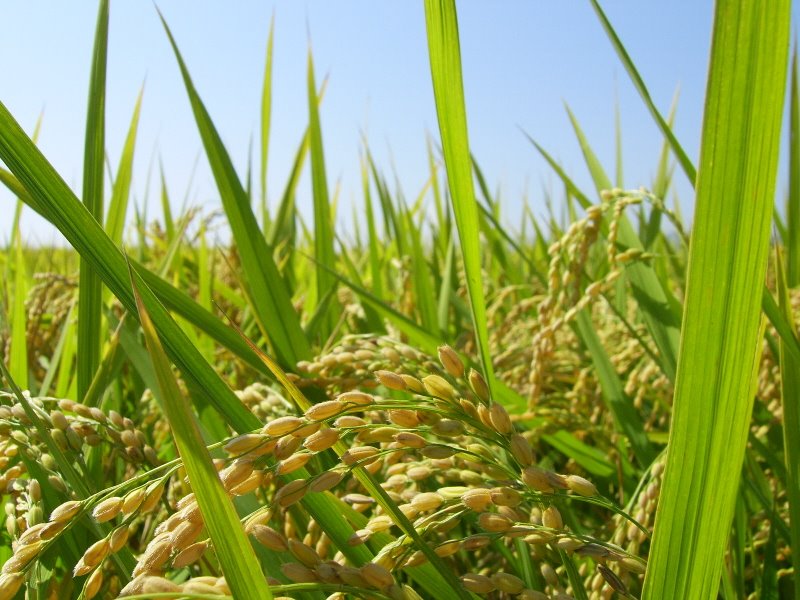
Cosmos flowers and cricket sounds are the typical symbols of autumn in Korea. Long, hot and sticky summer has completely gone and cool autumn comes. Autumn is the harvest season and offers us the abundant gifts of nature, so an old Korean proverb says that the sky is high and the horses get fat during autumn.
Gyeongan 경산 is located on the east side of Daegu and famous for its sweet grapes and peaches. The above photo shows Gyeongsan grapes in the fall of 2007. As the summer is getting longer, lots of dragonflies can be seen in the sky, and one of the dragonflies in the cloudy sky sits on a reed stem.

Sunday, August 19, 2007

Hodie Mihi, Cras Tibi

Hodie Mihi, Cras Tibi is from the latin meaning "Today me, Tomorrow you" and inscribed on both sides of the gate of catholic cemetery in Daegu.

Friday, August 17, 2007

take a sip of water

take a rest to drink water as they pass a small spring

Tuesday, July 17, 2007

green summer

Budding grape clusters in the vineyard around Gyeongsan
persimmons & pumpkins.

Wednesday, July 11, 2007

visitors

Sometimes home owner needs this warning sign, 
but probably public urinators don't like the scissors👿.
Cicadas on the insect screen in an apartment.

Friday, May 25, 2007

paper lanterns

A lotus lantern festival is held to celebrate the birth of Buddha over the weekend before the birth date in Korea. Buddha's birthday is on the eighth day of the fourth month of the lunar calendar. So, the birthday in this year 2007 is May 24. The Buddhists decorated the temple with the handmade lanterns made from rice paper and bamboo. In the evening the Buddhists marched in a parade on the streets. The Lotus flower symbolizes enlightenment in Buddhism, which rises clean and untainted out of muddy waters.
Various forms of Lantern are displayed in front of Daebi(Great Mercy) Buddhist temple near Gyeongsan for this year's parade.

Wednesday, May 02, 2007

country landscape

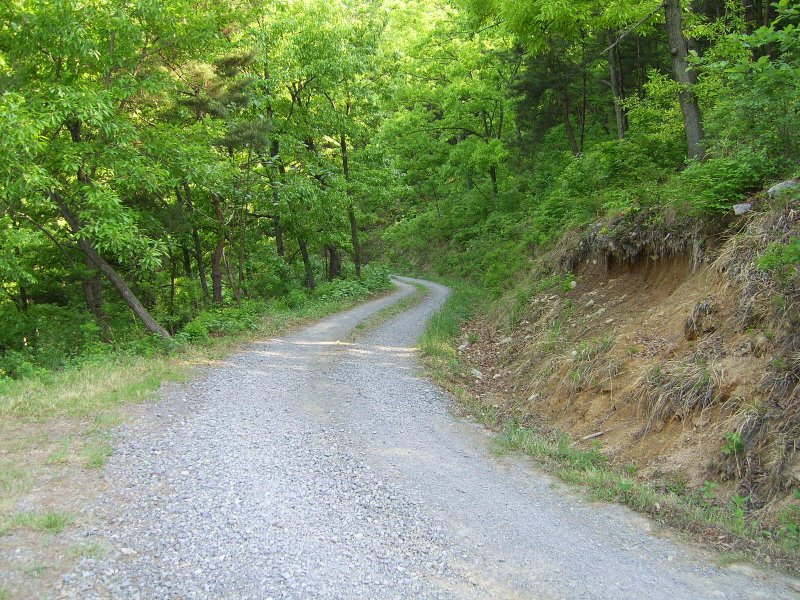
Jaeho was born in a small town named Cheongdo, which is located to the south of Gyeongsan. It is about 30 km or 18 miles away. From time to time, he rides a bike to go there from Gyeongsan. It takes about two and a half an hour by bike. A high pass called Namsunghyeon-Jae is located between the two regions, which means village name near it and pass respectively. As the road descends from the peak to Cheongdo, you can enjoy a typical rural atmosphere. The above photo shows the area surrounding Cheongdo.

On the right is a flower on the mountain trail. The seeds fell to the earth, few of them survived and grew into flowers.

Tuesday, April 03, 2007

warm memory

The typical front view of traditional rural house in Korea. Lattice door, seive made from bamboo, and mud wall can be seen. The mud wall was partly repaired with cement instead of mud. The trditional paper is pasted on the door.
The view under an eave of an old house on the southern outskirts of Gyeongsan reminds a passer-by of time passed.

Sunday, March 25, 2007

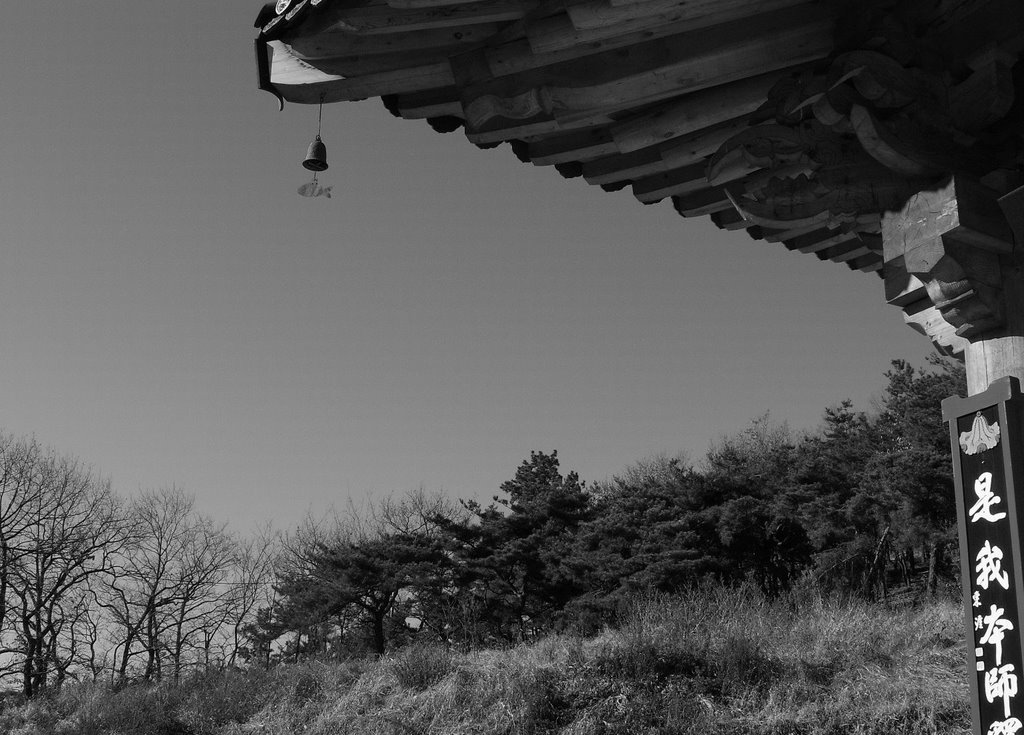
scenes around temple

A traditional residence attached to a buddhist temple. Buddha images carved into one of the rocks of Mt. Namsan in Gyeongju which is located to the east of Gyeongsan, about 70 km from it. Spring Blossom shows spring is in the air.

Wednesday, February 07, 2007

mountain cafeteria

This humble mountain restaurant is situated midway up the slope of Mt. Gaji 가지산, near Mt. Eok 억산, an area famous for its magnificent mountain ranges. Many Koreans enjoy hiking here on weekends.

This cafeteria serves simple food and alcoholic beverages. The name of the cafeteria, Rice Rock Refuge, is written on a wooden signboard at the top of the pavilion. A rock that resembles a grain of rice is located nearby. In winter, heavy snow sometimes falls in the mountains, and this pavilion is also used as a refuge for hikers.

The menu is written on the roof and includes, from the far left: soju 소주(a distilled liquor), beer, herbal tea, herbal liquor, dongdongju 동동주(a traditional rice-fermented liquor), coffee, boiled fish cakes, instant noodles, handmade tofu, and arrowroot juice. Several bottles of liquor in plastic containers are placed on the table. The fish cakes are kept simmering in a cauldron, and some instant noodles are stored inside the window.

Wednesday, January 31, 2007

Mt. Eok 억산

Mt. Eok 억산 lies about 30km(18.6 miles) southeast of Gyeongsan. This photo was taken on the south side of the ridge to the summit of Mt. Eok. This mountain is famous for its impressive peak, which was cleaved. According to the legend, a monster serpent that had wanted and tried to be a dragon for 999 years split the peak by its giant tail, flying to the west after it had failed to become a dragon. It needed a period of 1000 years to become a dragon.

The view from the summit ridge was quite nice. The peak was surrounded by the other mountains, partly covered in snow. The snow on the mountains slowly melts away during the day. We still don't have enough snow this year.
(Photo taken from near the summit of Mt. Eok.)

Sunday, January 21, 2007

like the wind and the clouds

View from the Pavilion in Jangyuk Buddhist temple 장육사 in the mid-eastern region of Korea. The temple nestled in the peaceful mountain was established by Seon master Naong 나옹 in the 14'th century, who wrote the following poem.

Blue Mountain teaches me to live silently
Blue sky teaches me to live innocently,
and to live like water and wind and die, 
leaving behind love and hatred

Ripe persimmons on the tree can be seen, which has not been picked yet. It seems like that they are preserved for bird food during winter.

Friday, January 19, 2007

Winter View

Took a short break and a snapshot while hiking around mountains near Gyeongsan. 

Monday, December 25, 2006

encounter 2

Once again I took a break on the mountain pass near Gyeongsan during a bicycle trip. This road was newly paved and opened to public traffic on X-mas Eve. Two middle-aged man and woman got on the minivan. See the blog dated Sep. 20, 06.

Saturday, November 18, 2006

autumn reflection

Fallen leaves in a stream, and a tree reflected in it. Autumn paddy field in Gyeongsan shows that harvest is getting close .

Wednesday, September 20, 2006

encounter

Took a break on the pass during a bicycle journey. Two middle-aged man and woman got on the mini truck.

Sunday, September 03, 2006

messenger of autumn

A Dragonfly is sitting on a wire in the vineyard in the rural outskirts of Gyeongsan. As the grapes are ripening. the sky is getting clear and blue. Autumn is just around the corner.

Sunday, July 30, 2006

backyard & vineyard on a rainy day

They can get a glimpse of life in the backyard, too. Heavy rain and stormy wind are knocking grapes off the clusters.

Tuesday, June 06, 2006

samsung station


They have a small railway station around Samsung village, which lies about 5 km north of Gyeongsan. Japanese completed the railway linking Seoul to Busan about 100 years ago when they tried to colonize Korea. Samsung station that began passenger service 85 years ago was only one of the stations along the railway. However, the time has passed and the station was closed last year because of a decrease in commercial passengers so the typical view of the station crowded with morning commuters from the nearby villages will not be seen anymore.

Most villagers who used to take the trains have got older, and buses and private cars which became another popular form of transportation among their young families, have been substituted for the train.

Samsung village and station are not related to Samsung Electronics at all.😸 

Friday, June 02, 2006

on the road


Someone asks a blind man for directions on the road.
The blind man tells him, giving his stick to him, 
"Take this one and go."

Sunday, May 14, 2006

wall

Holes for ventilation on the wall of a building along the street in Gyeongju and street number with its name are seen.

Sunday, April 09, 2006

moving mind

Juheulgwan 주흘관 is one of three castle gates across Saejae 새재 valley near Mungyeong 문경 located in the southeast of Korea.

Two men were arguing about a flag waving in the wind. The first one said, "The flag is moving." Another one contended "No, it is the wind that is moving."

A Seon master that chanced to be passing by overheard the debate and told them "Not the wind, not the flag, it is your mind that is moving."

Saturday, March 04, 2006

pacific saury drying

Pacific sauries are being dried on the 2nd floor of an old Japanese house in Guryongpo 구룡포 九龍浦 harbor near Pohang on the eastern coast. Guryongpo used to be just a port town but it is getting famous for dried pacific sauries. Many tourists visit this town to enjoy them during the winter. Winter is the best season to dry and taste pacific sauries.

It is also easy to find old Japanese houses in Guryongpo because many Japanese lived here during the Japanese rule in Korea. Dried pacific saury becomes Koreans' favorite winter food. It is well known that Pacific saury is so nutritious. It is called Gwamegi 과메기 in Korean.

Thursday, February 09, 2006

Nostalgia

An old rural house around Gyeongsan. Two kinds of traditional sieves used to clean grain and to separate insects from the grain are seen on the left. Two pumpkins are being dried on the right. Winter is the ideal time to enjoy pumpkin. It's especially good in soups. An old retired farmer seems to have this house.

Sunday, February 05, 2006

Al-Fatah Masjid

As-salaam alaikum !
There is a Mosque in the northwest of Busan, the second biggest city of Korea as well as the major port of southern coast. An Islamic missionary association of Libya helped it set up in 1980. Islam was first introduced to Koreans by Turkish soldiers who had joined the Korean War to assist South Korea.

Muslims in Korea consist of few Koreans and Muslim foreigners, and their brotherhood and solidarity are very strong. They have a halal food restaurant named Kebap house just behind this Masjid.

Tuesday, January 24, 2006

Monk's residence & a vent

Traditional tile-roofed monk's residence attached to a small temple around Gyeongsan.

Neither coming nor going.
Neither staying nor leaving. What is this?